

Many customers begin a modified PTFE project with only a target tube, drawing, sample or application requirement. They may not yet have a confirmed material grade, molding machine, tooling system, sintering furnace or established production process.
Buying a hydraulic press alone does not create a PTFE production capability. The material formulation, tube dimensions, powder charge, mold, pressing sequence, demolding method and sintering system must work together.
SUKO primarily manufactures PTFE processing machinery and complete production lines. We help customers progress from having only a product requirement to operating their own PTFE production line independently.
Our experience includes complete molding lines for bronze-filled PTFE tubes supplied to customers in Russia, Turkey and Syria, as well as a carbon-filled PTFE tube molding project for a customer in Russia.
Why Modified PTFE Requires a Purpose-Built Molding Line
A modified PTFE compound cannot always be processed by replacing virgin PTFE powder with filled powder while leaving every machine and process setting unchanged.
Bronze, glass fiber, carbon fiber, carbon, graphite and pigments can affect:
- Bulk density and powder flow
- Charge weight for the same tube dimensions
- Powder distribution inside the mold
- Compaction behavior
- Pressure-holding requirements
- Demolding behavior
- Tooling wear
- Sintering response
- Dimensional change after sintering
- Surface condition and machining allowance
The extent of these changes depends on the base resin, filler type, filler percentage, tube cross-section and production method. The complete line must therefore be designed around the actual product and compound.
How Different Compounds Affect Production-Line Planning
| Material Direction | Possible Production Difference | What the Line Design Must Evaluate |
|---|---|---|
| Virgin PTFE | Reference route for chemical resistance, purity and electrical insulation | Powder grade, tube dimensions, compaction, demolding and sintering cycle |
| Бронзонаполненный ПТФЭ. | Higher compound density changes charge weight and material handling | Press capacity, mold loading, tooling, handling, sintering and machining allowance |
| Carbon or carbon-fiber-filled PTFE | Bulk density, dispersion, compaction and surface condition vary with the carbon system | Mixing uniformity, powder handling, mold design, pressing route and dimensional control |
| Стеклонаполненный ПТФЭ. | The filler changes mechanical behavior and may increase tooling considerations | Compound compatibility, tooling condition, compaction and finished-part requirements |
| Pigmented PTFE | Color dispersion and batch consistency become important | Pigment compatibility, mixing, temperature resistance and color consistency |
This table provides an initial direction only. The actual machine and process configuration must be confirmed from the selected compound and product specification.
Start with the Tube, Not the Machine Model
The first step is to define what the customer must produce.
For a modified PTFE molded tube, SUKO evaluates:
- Outside diameter
- Inside diameter
- Толщина стенки.
- Individual tube length
- Finished tube or machining billet
- Required machining allowance
- Compound type and filler percentage
- Expected production quantity
- Dimensional tolerance
- Surface requirements
- Final application
These details determine the powder charge, mold dimensions, press capacity, working stroke, demolding structure and furnace loading requirement.
Selecting a press only from the outside diameter can be misleading. Two tubes with the same outside diameter may require very different equipment if their inside diameters, lengths, compounds and charge weights are different.
Step 1: Evaluate the Material Direction
Some customers know that virgin PTFE does not provide sufficient wear resistance or dimensional stability, but they have not selected a specific filled grade.
SUKO can explain the main directions of commonly used materials:
- Virgin PTFE for chemical resistance, purity and electrical insulation
- Glass-filled PTFE for improved compressive behavior and dimensional stability
- Carbon-fiber-filled PTFE for stiffness and creep control
- Bronze-filled PTFE for load, wear and heat-transfer requirements
- Carbon or carbon/graphite systems for wear, friction, thermal or electrical requirements
- Pigmented PTFE when identification or appearance is required
SUKO is not positioning itself as a PTFE resin manufacturer. Our role is to help the customer understand how the selected compound affects the product, tooling, molding machine and complete production line.
The final powder grade should be confirmed according to the customer’s operating conditions and the applicable material data.
Step 2: Configure Powder Preparation and Handling
The powder must arrive at the mold in a suitable and consistent condition.
Depending on the compound and production requirements, the preparation section may include:
- Powder loosening or sieving
- Controlled mixing
- Weighing
- Material transfer
- Powder charging
- Dust-control measures
- Cleaning arrangements between material batches
Filled compounds require attention to material uniformity. Poor filler distribution can produce inconsistent density, surface appearance or mechanical performance across the molded tube.
Bronze-filled compounds also have a significantly different charge weight from virgin PTFE for the same apparent volume. Material handling and batch weighing must reflect the actual compound density.
Step 3: Select the PTFE Molding Press
The press must provide more than a nominal tonnage value.
Equipment selection should consider:
- Required forming force
- Working-table dimensions
- Cylinder stroke
- Available mold height
- Powder charge and preform height
- Pressure-control accuracy
- Pressure-holding requirements
- Loading access
- Demolding direction
- Production frequency
- Automatic or semi-automatic operation
For tall tube blanks, the distribution of compaction through the powder column must be considered. Depending on the tube geometry, a double-acting or specially configured pressing structure may be evaluated to improve compaction control.
The correct press is the machine that matches the material, mold, tube dimensions and production method, rather than simply the machine with the largest pressure rating.
Step 4: Design the Mold, Mandrel and Demolding System
The mold defines the tube geometry before sintering:
- The mold cavity controls the outside diameter
- The mandrel controls the inside diameter
- The filling height and compression route affect the preform
- The demolding structure determines how the unsintered blank is removed safely
Tooling design must consider:
- Compound behavior
- Tube wall thickness
- Tube length
- Machining allowance
- Expected dimensional change
- Surface finish
- Ease of powder loading
- Demolding force
- Tool maintenance
Filled PTFE may also introduce different tooling-wear considerations. The mold and mandrel must be designed for repeat production and practical maintenance, not only for producing the first acceptable preform.
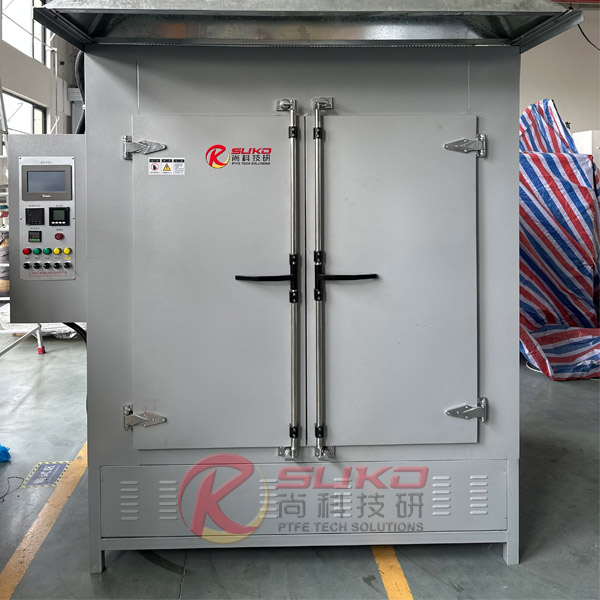
Step 5: Match the Sintering System to the Product
After molding, the unsintered PTFE tube must be heated, held and cooled under a controlled program.
The sintering system must be evaluated according to:
- PTFE compound
- Tube cross-section
- Individual product mass
- Number of tubes per furnace load
- Furnace airflow
- Temperature uniformity
- Heating and cooling requirements
- Required production cycle
PTFE has low thermal conductivity. A thick molded tube does not heat and cool in the same way as a thin component. A furnace selected only by its external chamber dimensions may not provide the required product consistency.
The sintering program should be established through the selected material, tube dimensions and actual production trials.
Step 6: Plan Cutting, Machining and Inspection
The customer may require a sintered tube blank, a rough-machined tube or a finished component.
The downstream section may therefore include:
- Length cutting
- Facing
- Turning
- Boring
- Surface finishing
- Dimensional inspection
- Density or material verification
- Batch identification
- Finished-product packaging
Machining allowance must be considered before the mold is designed. It cannot be added accurately after the molding line and tooling have already been finalized.
Bronze-Filled PTFE Tube Molding Projects
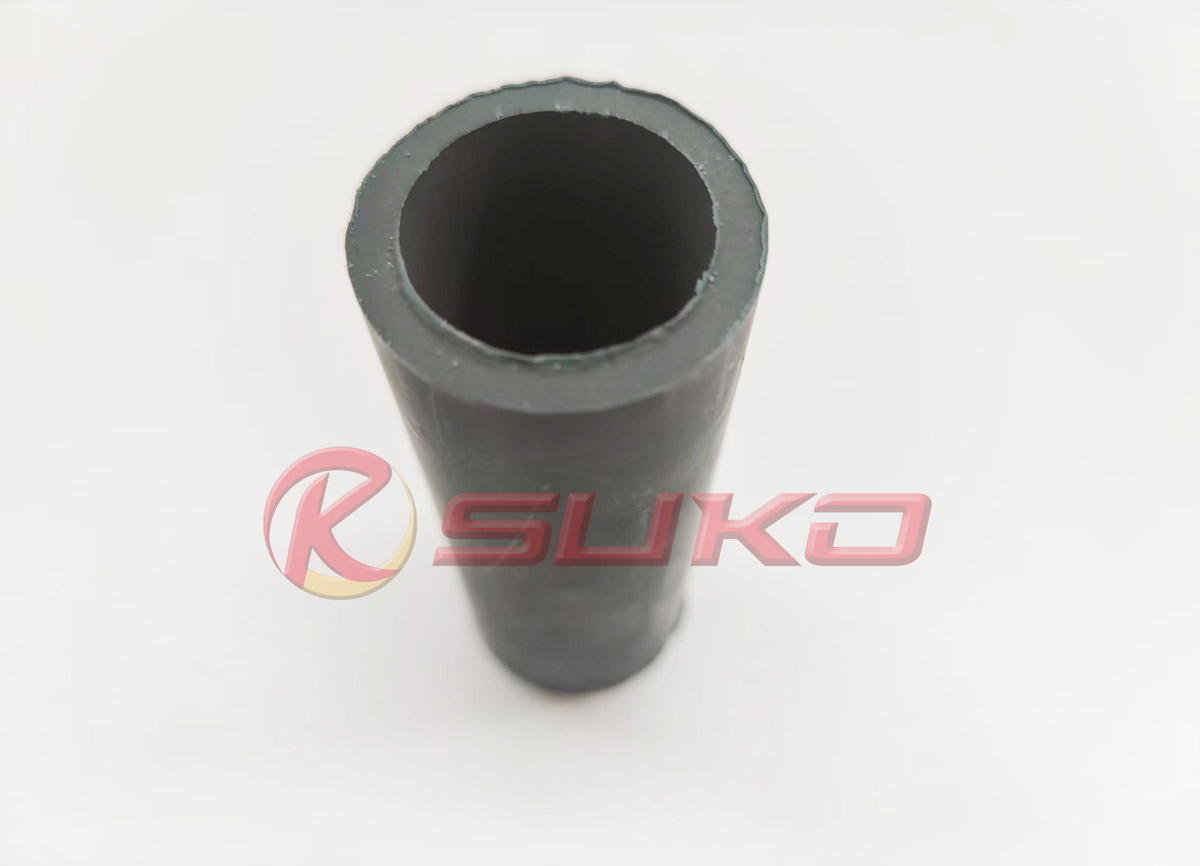
SUKO has supplied complete molding lines for bronze-filled PTFE tubes to customers in Russia, Turkey and Syria.
Bronze-filled PTFE is commonly evaluated when the finished component requires improved load capacity, wear resistance, thermal conductivity or dimensional stability.
For the production line, the important point is that bronze filler changes the compound density and powder charge. The press, mold, material loading, handling and sintering system must be matched to the actual formulation and tube dimensions.
These projects demonstrate SUKO’s ability to connect:
- Material direction
- Powder preparation
- Press selection
- Mold and mandrel design
- Demolding
- Sintering
- Production guidance
Image caption:
Bronze-filled PTFE molded tubes produced on SUKO production lines supplied to customers in Russia, Turkey and Syria.
Image alt text:
Bronze-filled PTFE molded tubes produced with SUKO molding lines
Carbon-Filled PTFE Tube Molding Project in Russia
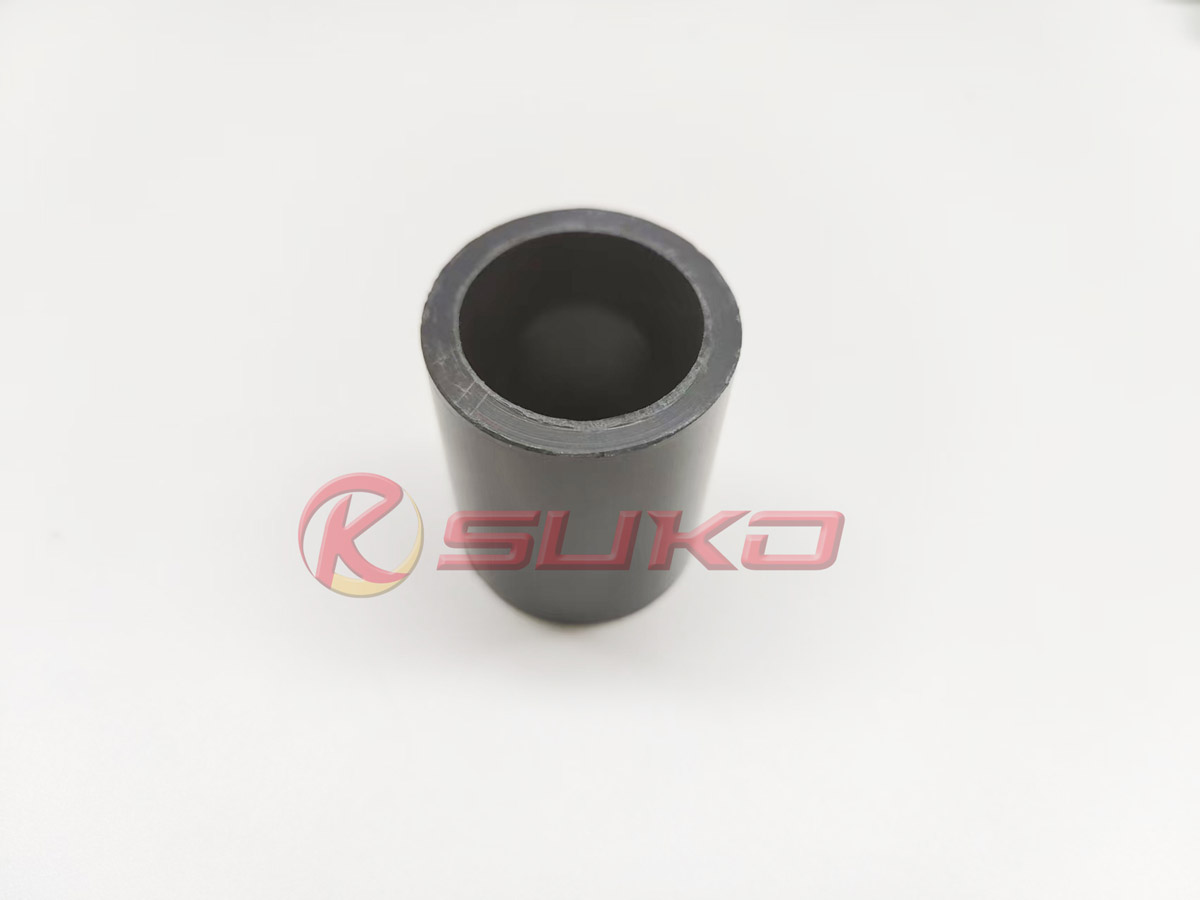
SUKO has also supplied a complete carbon-filled PTFE tube molding line to a customer in Russia.
“Carbon-filled PTFE” is not one fixed compound. Carbon powder, carbon fiber, graphite and combined filler systems may have different bulk densities, forming behavior and final properties.
Before configuring the line, the project must establish:
- Carbon filler type
- Filler percentage
- Target product performance
- Tube dimensions
- Powder preparation requirements
- Compaction and demolding behavior
- Dimensional change after sintering
- Surface and machining requirements
- Electrical requirements, when applicable
A request for a “black PTFE tube” is not sufficient to select a compound. Black pigment, carbon-filled wear material and electrically conductive PTFE may look similar while serving entirely different purposes.
Image caption:
Carbon-filled PTFE molded tube produced on a complete SUKO molding line supplied to a customer in Russia.
Image alt text:
Carbon-filled PTFE molded tube produced with a complete SUKO molding line
From a Product Requirement to Independent Production
A customer may begin with no PTFE equipment and limited processing experience. SUKO can begin from a drawing, sample or target tube and develop the required production route.
A complete project may include:
- Product and material evaluation
- Process-route selection
- Production-capacity planning
- Equipment and line design
- Mold and mandrel design
- Powder-preparation equipment
- PTFE molding press
- Sintering furnace
- Auxiliary and downstream equipment
- Factory-layout and utility guidance
- Equipment installation and commissioning
- Trial production
- Machine-operation training
- Production-process guidance
The project objective is not merely to deliver equipment that can move and apply pressure. It is to help the customer establish a line capable of producing the required PTFE tubes independently.
Single Machine or Complete Production Line?
SUKO can support different project scopes.
A customer with existing powder-processing, sintering and technical capability may require only:
- A PTFE molding press
- A custom mold and mandrel
- A sintering furnace
- An auxiliary machine
A customer starting from zero may require:
- Complete line planning
- Powder-preparation equipment
- Press and tooling
- Sintering equipment
- Cutting or machining equipment
- Installation and commissioning
- Trial-production support
- Operator and process guidance
SUKO can also supply finished modified PTFE tubes or custom parts when the customer needs products rather than its own manufacturing line. However, our primary capability is PTFE machinery and helping customers establish independent production.
Information Required to Design the Line
To evaluate a modified PTFE tube molding line, please provide:
- Product drawing or sample
- Outside diameter and inside diameter
- Wall thickness and length
- Filler type and percentage, if already selected
- Final application
- Finished component or machining billet
- Required tolerance
- Expected daily or monthly output
- Available factory space
- Local voltage and utility conditions
- Existing equipment
- Required level of automation
- Required downstream machining or inspection
If the material has not been selected, provide the working medium, temperature, load, motion and required product performance. SUKO can explain the suitable material directions before the production line is finalized.
Conclusion
Modified PTFE tube production requires more than a molding press.
Powder preparation, compound behavior, charge weight, pressing, tooling, demolding, sintering and machining must be designed as one production system.
SUKO’s bronze-filled PTFE projects in Russia, Turkey and Syria and carbon-filled PTFE project in Russia demonstrate our ability to provide complete modified PTFE molding lines.
We help customers move from having only a target product to operating their own PTFE production line independently.
Discuss Your Modified PTFE Production Project
Send SUKO your target tube drawing, material direction, production requirement and available factory conditions. We can evaluate the required process, press, mold, sintering system and complete line configuration.
Телефон / WhatsApp: +86 19975113419
Email: sukoptfe@gmail.com
Контакты:https://ptfe-machinery.com/contact/

