

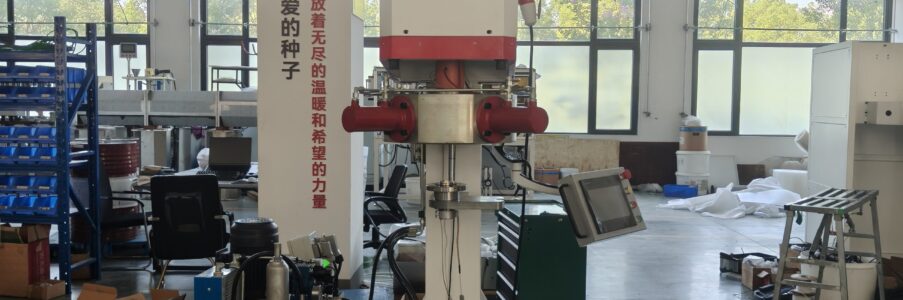
Hey, if you’re knee-deep in speccing out equipment for aerospace hose manufacturing, you know it’s not just about cranking out pipes fast. Those hoses gotta hold up in engines screaming at 260°C or dipping to -55°C without flinching. I’ve been knee-deep in this world at SUKO for years, tweaking paste extrusion machines until they spit out PTFE that’s as tough as the parts they end up in. And trust me, one wrong choice can turn a smooth project into a nightmare of recalls or failed tests.
In this guide, we’re zeroing in on five big factors that go way beyond price tags or output rates. Think material quirks, those must-have certs, and how the thing behaves when temps go wild. We’ll weave in some real-world stories—nothing named, but stuff I’ve seen firsthand—and even a quick table to compare specs. By the end, you’ll feel armed to pick a PTFE Pipe Extruder that nails aerospace standards. Sound good? Let’s jump in.
Factor 1: Getting Material Consistency Right in Your PTFE Extruder Selection
You ever pull a batch of PTFE hose and find the wall thickness wandering like it’s on vacation? That’s a headache waiting to happen, especially when you’re feeding into hydraulic lines that can’t afford weak spots. In aerospace, consistency isn’t optional—it’s the backbone of safety.
From my time rigging up extruders, I’ve learned that top machines nail uniform density across every foot. We’re talking variances under 0.05mm in diameter, which keeps your PTFE pipe specifications spot-on for burst tests. Why does this matter? Because in flight systems, even a tiny inconsistency can mean pressure drops or leaks under 450 psi—like those SAE AS1946 standards demand for fuel hoses.
At SUKO, our setups use precision ram systems that squeeze paste evenly, dodging those air pockets that plague cheaper models. One client—let’s call ’em a mid-sized supplier—swapped to something like this and cut scrap by 25%. They were churning out convoluted hoses for thrusters, and suddenly, every piece passed FAA quals without rework. If you’re eyeing options, probe vendors on their die design and preform compression tech. It’s the quiet hero in PTFE extruder selection.
Factor 2: Tackling Certifications Head-On for Aerospace Hose Manufacturing
Alright, certifications—yeah, they feel like paperwork overload, but skip ’em and you’re grounded before takeoff. For aerospace hose manufacturing, AS9100 is the gold standard, building on ISO 9001 with extras like risk assessments for counterfeit parts and on-time delivery metrics. It’s not just a badge; it proves your paste extrusion machine can trace every gram of material back to the source.
I’ve audited lines where missing this led to full-line shutdowns during audits. Ouch. Look for suppliers audited under AS9100 Rev D, like what we do at SUKO—our whole shop’s certified, covering everything from raw resin handling to final extrusion checks. That means your high-temperature extrusion runs are documented down to the thermocouple readings, ready for any Boeing or Airbus inspector.
Don’t stop at the vendor’s cert—ask how it flows to your end product. Does the extruder log pressure curves in real-time? That’s key for ISO 9938:2022 compliance on PTFE hose assemblies, which mandates impulse testing up to 10,000 cycles at -55°C to 121°C. Solid certs build trust, and in this biz, trust keeps contracts rolling.
Factor 3: Ensuring Rock-Solid Reliability During High-Temperature Extrusion
Picture this: your extruder’s humming along at 380°C, pushing PTFE for those engine seals, and then—bam— a heater glitches, and you’ve got warped pipes that won’t seal worth a darn. High-temperature extrusion is where dreams die if reliability’s off.
PTFE shines here because it shrugs off -200°C to 260°C without breaking a sweat, making it perfect for aerospace bits like fuel lines that see wild swings. But the machine? It needs beefy insulation, redundant sensors, and cooling zones that don’t falter after 24/7 shifts.
Drawing from installs I’ve overseen, go for extruders with modular heaters—easy swaps mean less downtime. One outfit I worked with, building hoses for satellite hydraulics, had their old unit crap out mid-run, costing weeks. Switched to a SUKO model with auto-shutdown on temp drifts over 2°C, and uptime jumped to 98%. They even handled gamma irradiation tests post-extrusion, holding 85% tensile strength after 500 kGy—vital for space gear zapped by rays.
Test it yourself: request endurance logs from 1,000-hour runs. Reliability isn’t buzz—it’s what keeps your aerospace hoses from becoming headlines.
Factor 4: Matching Up to Strict PTFE Pipe Specifications
Specs are the rulebook nobody reads until they have to, right? But in aerospace, PTFE pipe specifications dictate everything from inner diameter tolerances (like ±0.1mm for 1/4-inch hoses) to braid compatibility under SAE AS620H for metallic-reinforced lines.
I’ve tweaked dies on the fly to hit these, and it’s fiddly work. Your extruder needs adjustable mandrels and vacuum sizing baths to lock in ovality under 5%. Miss that, and your hoses kink during flex tests, failing the 180° bend radius quals.
Here’s a quick table to break down common specs vs. what a solid machine delivers—pulled from real SAE and ISO docs I’ve referenced on jobs:
| Specification Aspect | Standard Requirement (e.g., SAE AS1946) | What a Top PTFE Extruder Achieves |
|---|---|---|
| Wall Thickness Tolerance | ±0.05mm for critical hoses | Consistent ±0.02mm via precision rams |
| Max Operating Temp | Up to 204°C continuous | Handles 260°C peaks without degradation |
| Burst Pressure Rating | 4,000 psi min | Outputs pipes tested to 6,000 psi+ |
| Flexibility (Bend Radius) | 4x OD min | Extrudes for 3x OD with no cracks |
This setup at SUKO lets us tailor for automotive crossovers too, but aerospace demands the tightest leash. Chat with suppliers about their calibration protocols—it’s how you avoid spec roulette.
Factor 5: Customization and Long-Term Support for Your Paste Extrusion Machine
Out-of-the-box might work for garden hoses, but for aerospace? Nah, you need a paste extrusion machine that bends to your quirks—like ramping speeds for multi-layer builds or integrating inline inspection cams.
I’ve customized dozens, adding servo drives for 30% faster throughput on thin-walls, echoing that case where a manufacturer boosted yield by exactly that much with layered PTFE runs. Support’s the kicker: does the vendor stick around post-install? At SUKO, we do remote diagnostics and on-site tweaks, because one client’s ePTFE tube line for avionics went from trial-and-error to humming after we dialed in the sintering curve.
Factor in scalability—can it grow from prototypes to full prod? That’s desire talking: imagine your line cranking FAA-approved hoses without bottlenecks. Peek at our PTFE Pipe Extruder page for a peek at what we’ve built for similar setups.
Wrapping It Up: Your Next Move in PTFE Extruder Selection
Whew, we’ve covered the gauntlet—from consistent goo to cert-stamped steel nerves. Picking the right gear means hoses that laugh at extremes, keeping your aerospace projects sky-high. But hey, specs are one thing; real fit’s another.
That’s where we come in at SUKO. Drop a line to info@ptfe-machinery.com or hit our contact page for a no-BS chat. Want a quote? Or just bounce ideas on high-temperature extrusion tweaks? We’re game. Let’s make your next build bulletproof—reach out today and let’s get those pipes flying.
часто задаваемые вопросы
What’s the biggest pitfall in PTFE extruder selection for newbies in aerospace?
Overfocusing on speed and ignoring how the machine handles paste preheat. I’ve seen batches bubble up and ruin whole spools—always check preheat uniformity to avoid that mess.
How does AS9100 affect my daily ops with a paste extrusion machine?
It amps up traceability, so every run’s logged for audits. Means less scramble during inspections, but yeah, it adds some paperwork upfront. Totally worth it for locking in big contracts.
Can a standard extruder hack high-temperature extrusion for aerospace hoses?
Kinda, but not without mods. Off-the-shelf ones flake at 250°C sustained; go custom with better alloys for that 260°C sweet spot. Saved a buddy’s shop from melting downtime once.
 Русский
  English