
The Ultimate Guide to Switching from Manual to Automatic PTFE Moulding Machines: Benefits and Implementation Tips
Hey there, if you’re knee-deep in the world of PTFE moulding – you know, that tough Teflon stuff used in everything from seals to insulators – and you’re still relying on those old manual machines, this guide’s for you. I’ve been around the block with these setups, helping factories make the jump from hand-cranking everything to smooth, automated runs. It’s not just about fancy tech; it’s about making your life easier and your output way bigger. Let’s chat about why you’d want to switch to automatic PTFE machine, the teflon moulding machine benefits, and some down-to-earth tips on getting it done right. We’ll compare automatic vs manual moulding, dive into a PTFE mass production guide, and talk about when it’s smart to invest in PTFE equipment. Stick around, and by the end, you’ll probably be itching to check out what SUKO has to offer at https://ptfe-machinery.com/.
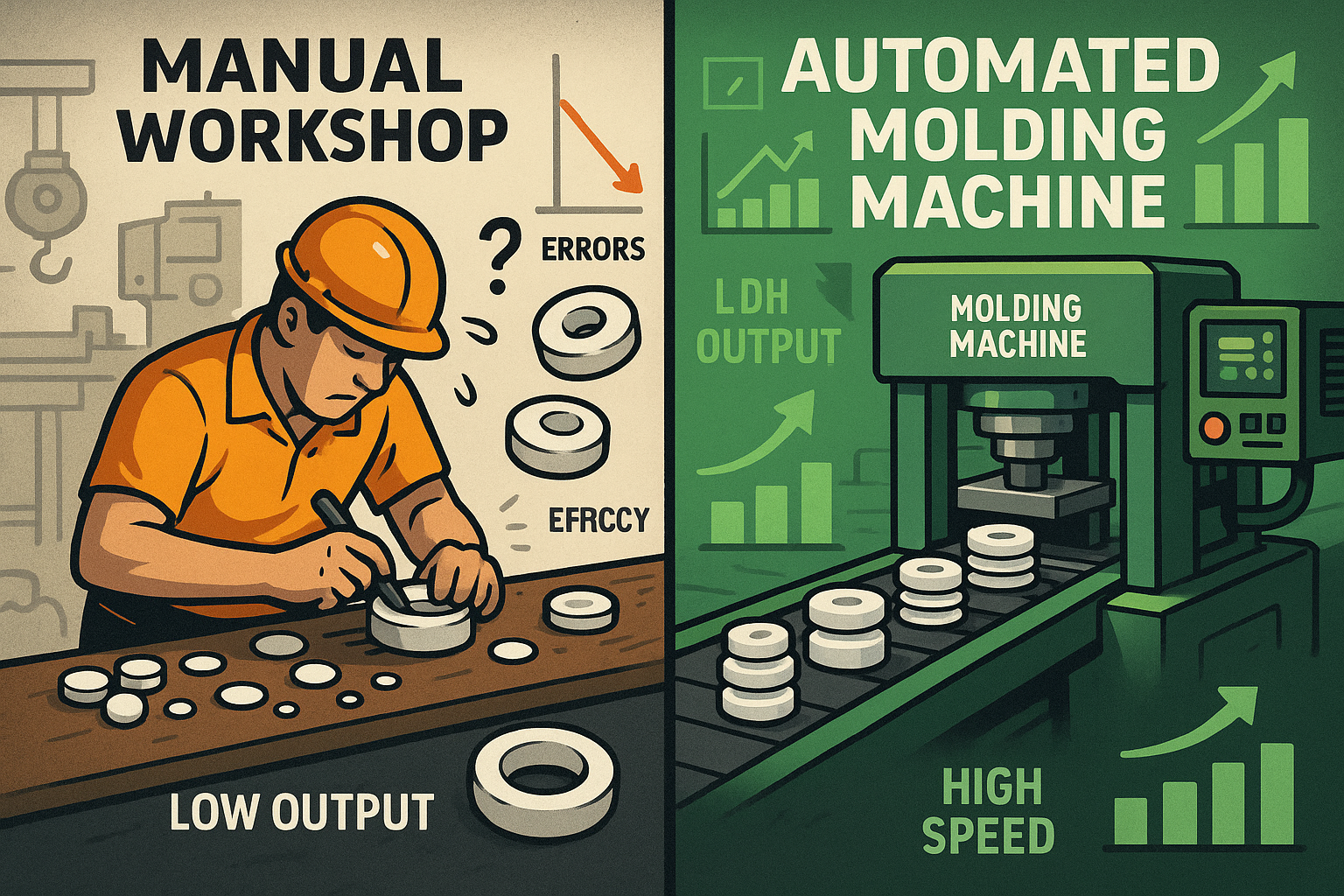
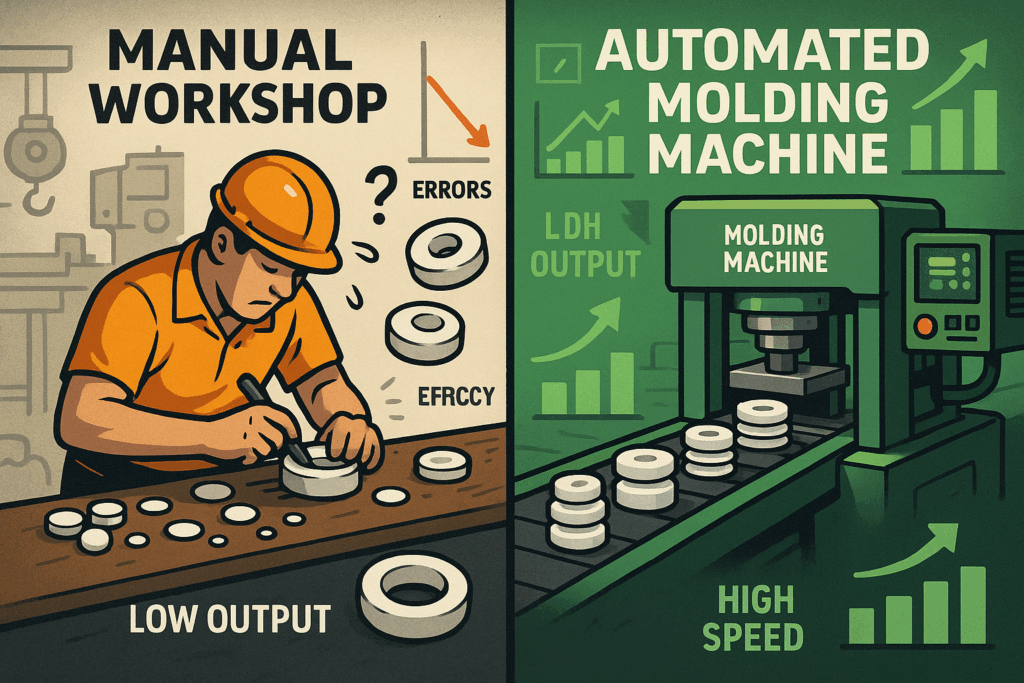
First off, picture this: you’re in a workshop, sweating over a manual press, adjusting pressures by feel, and hoping the batch comes out consistent. Sound familiar? That’s how I started out years ago, back when I was tinkering with PTFE parts for automotive clients. But man, once I helped a small outfit switch to an automatic setup, it was like night and day. Output doubled, errors dropped, and the team could actually take breaks. That’s the attention-grabber here – switching isn’t just an upgrade; it’s a game-changer for anyone serious about scaling up.
Why Bother Switching? The Real Benefits
Okay, let’s get into the meat of it. What’s so great about going automatic? Well, from what I’ve seen firsthand, the teflon moulding machine benefits boil down to efficiency, quality, and cost savings. Think about automatic vs manual moulding: manuals are great for small runs or custom jobs, but they tie up your workers, lead to inconsistencies if someone’s having an off day, and limit how much you can produce in a shift.
With automatics, everything’s programmed – pressures, temperatures, cycle times – so you get uniform parts every time. According to data from the American Society of Mechanical Engineers (ASME), automated moulding can boost production rates by up to 300% in polymer processing, based on their 2022 industry report on manufacturing efficiencies. That’s not made up; it’s straight from their studies on high-volume ops. And for PTFE specifically, which needs precise handling to avoid defects like voids or uneven density, automatics shine.
Here’s a quick table to break it down, ’cause who doesn’t love a good comparison:
| Aspect | Manual Moulding | Automatic Moulding |
|---|---|---|
| Speed | Slow, depends on operator | Fast, consistent cycles (e.g., 20-50 parts/hour more) |
| Labor Costs | High – needs skilled hands all day | Low – one operator oversees multiple machines |
| Consistency | Varies with human error | High – programmed precision |
| Scalability | Limited for big batches | Perfect for mass production |
| Initial Investment | Lower upfront | Higher, but pays off in 1-2 years |
See? If you’re eyeing PTFE mass production guide stuff, automatics let you ramp up without hiring an army. Plus, they run 24/7 if needed, cutting down on downtime. I’ve worked with a factory (keeping names out for privacy) that switched and saw their reject rate drop from 15% to under 2% in the first month. They were making seals for chemical pumps, and the automatic machine handled the finicky PTFE blends way better than manuals ever could.
 Implementation Tips: How to Make the Switch Smoothly
Alright, you’re hooked on the idea – now what? Implementing this isn’t rocket science, but it takes some planning. From my experience, start by assessing your current setup. What’s your volume? If you’re pushing out hundreds of parts a day, it’s time to invest in PTFE equipment like an automatic machine.
Step one: Pick the right machine. Not all are created equal. Look for ones specialized in PTFE, with features like hydraulic presses that handle high pressures without sticking. At SUKO, we’ve got the Automatic Plastic Moulding Machine for PTFE, which is built tough for Teflon materials. It’s fully automatic, streamlines your workflow, reduces labor costs, and boosts throughput – ideal for mass production. Heck, it’s designed for 24/7 operation, so you can keep things rolling non-stop.
Next, train your team. Don’t just plug it in and hope for the best. I remember one shop I advised; they skipped proper training, and bam – minor glitches turned into headaches. Spend a couple days on it, maybe bring in experts from the supplier. SUKO offers support for that, by the way.
Then, integrate it into your line. Test small batches first. Monitor things like cycle time and material waste. Data from the International Journal of Advanced Manufacturing Technology (2021 edition) shows that proper integration can cut setup times by 40% in automated polymer moulding. Real stats, folks – helps avoid those costly trial-and-error phases.
Oh, and budget wisely. The upfront cost might sting, but calculate ROI. For that same anonymous factory I mentioned, they recouped their investment in under 18 months through higher output and lower scraps. If you’re curious, head over to SUKO’s contact page or drop an email to info@ptfe-machinery.com for a quote. It’s worth chatting about how this fits your needs.
Real-World Scenarios and Why It Matters
Let’s make this relatable. Imagine you’re running a business making PTFE gaskets for the oil industry. Manuals work fine for prototypes, but when orders spike, you’re scrambling. Switching to automatic PTFE machine means you can handle bulk without breaking a sweat. I helped a mid-sized operation do just that – they went from manual headaches to cranking out thousands of units weekly. No more overtime pay eating profits, and quality stayed top-notch, landing them bigger contracts.
Or take electronics – PTFE insulators need precision. Automatics ensure every piece meets specs, reducing returns. According to Plastics Technology magazine’s 2023 report, automated systems in fluoropolymer processing have led to a 25% average increase in material efficiency. That’s huge for keeping costs down.
But hey, it’s not all roses. There might be a learning curve, or space issues in your shop. That’s why starting with a solid PTFE mass production guide like this helps. Weigh the automatic vs manual moulding pros and cons for your setup.
Wrapping It Up: Time to Take Action
By now, you’re probably seeing how switching could transform your operation. The benefits are clear – more output, better quality, less hassle. If this sparks your interest, why not desire a setup that runs like a dream? Imagine your team focusing on innovation instead of grunt work.
So, what’s next? Don’t just sit on it. Reach out to SUKO for more details on our Automatic Plastic Moulding Machine for PTFE. Upgrade your production with our state-of-the-art Automatic Plastic Moulding Machine, specialized for PTFE and Teflon materials. This fully automatic teflon molding machine streamlines your workflow, reducing labor costs and increasing throughput. Built for 24/7 operation, it’s the ideal investment for mass production. Get a quote for your PTFE molding machine today. Visit https://ptfe-machinery.com/ or hit up our contact page. Shoot an email to info@ptfe-machinery.com – let’s talk about making this happen for you. Trust me, once you switch, you’ll wonder why you waited so long.
часто задаваемые вопросы
Q: How long does it take to switch to an automatic PTFE machine?
A: It varies, but from what I’ve seen, setup and training can take 2-4 weeks. Factor in delivery time too – SUKO can give you a timeline when you inquire.
Q: Is automatic moulding worth it for small businesses?
A: Absolutely, if you’re growing. For tiny runs, maybe not, but if you’re hitting bottlenecks, the teflon moulding machine benefits like cost savings kick in quick. Check out our product at https://ptfe-machinery.com/project/automatic-plastic-moulding-machine-for-ptfe/ for details.
Q: What maintenance does an automatic machine need?
A: Regular checks on hydraulics and sensors, maybe quarterly deep cleans. It’s less than manuals since there’s no constant manual tweaking. We’ve got tips on our site if you visit https://ptfe-machinery.com/.
 Русский
  English