
In the unforgiving landscape of the oil and gas industry, there is no room for error. From deep-sea drilling platforms to sprawling refineries, equipment operates under a relentless assault of extreme pressures, corrosive chemicals, and volatile temperatures. In this high-stakes environment, the integrity of every single component is paramount. A single failure, especially in a sealing element, can trigger a cascade of catastrophic events, leading to costly shutdowns, environmental disasters, and, most critically, threats to human safety.
This is why the conversation around sealing solutions is not just about components; it’s about reliability, resilience, and risk mitigation. For decades, one material has consistently proven its mettle in these demanding conditions: Polytetrafluoroethylene (PTFE).
The Unrivaled Properties of PTFE: A Material Forged for Extremes
PTFE, commonly known by its original trade name, is a fluoropolymer with a unique combination of properties that make it an ideal material for sealing applications in the harshest environments. It’s not just one feature but the synergy of its characteristics that sets it apart.
1. Near-Universal Chemical Inertness
The oil and gas industry handles a cocktail of aggressive and corrosive substances. This includes crude oil, sour gas (containing hydrogen sulfide, H₂S), aromatic hydrocarbons, steam, and potent industrial solvents.
- The Challenge: Many sealing materials, like elastomers or certain metals, will degrade, swell, or corrode when exposed to these chemicals. This degradation compromises the seal’s integrity, leading to inevitable leaks.
- The PTFE Solution: PTFE is virtually inert to all industrial chemicals. Its carbon-fluorine bond is one of the strongest in organic chemistry, making it impervious to chemical attack. This means PTFE gaskets for oil and gas maintain their structural integrity and sealing capability for extended periods, drastically reducing the risk of failure and the need for frequent replacement.
2. Exceptional Thermal Stability
Temperature fluctuations are a constant reality, from the cryogenic temperatures of LNG processing to the high heat of refining columns.
- The Challenge: A gasket material must remain stable and functional across this vast spectrum. Materials that become brittle at low temperatures or soften and degrade at high temperatures are a liability.
- The PTFE Solution: Standard PTFE performs reliably in a massive temperature range, typically from -200°C to +260°C (-328°F to +500°F). This resilience ensures that whether it’s used in cryogenic services or high-temperature steam lines, the gasket will not lose its sealing force.
3. Superior Performance Under High Pressure
The term high-pressure seals is central to oil and gas operations. Pressures in wellhead equipment, pipelines, and reactors can reach thousands of PSI (pounds per square inch).
- The Challenge: Under immense pressure, softer gasket materials can be extruded out of the flange gap. This phenomenon, known as “creep” or “cold flow,” results in a loss of bolt torque and a subsequent leak path.
- The PTFE Solution: While virgin PTFE has some susceptibility to creep, this is masterfully overcome by using filled PTFE grades. By adding fillers like glass fiber, carbon, or bronze, the material’s compressive strength and resistance to creep are dramatically enhanced. These composite PTFE gaskets can withstand extreme pressures without extrusion, ensuring a long-lasting, reliable seal. The quality of molding, which we will discuss later, is critical to maximizing this property.
4. Low Coefficient of Friction
PTFE has one of the lowest coefficients of friction of any solid material, comparable to wet ice on wet ice. While this is famous for non-stick pans, it has critical implications for industrial applications.
- The Challenge: In dynamic sealing applications or during the torquing of bolts on a flange, high friction can cause material to tear, bind, or result in inaccurate bolt loads.
- The PTFE Solution: The low-friction surface of a PTFE gasket ensures a smooth, consistent compression during installation. This allows for even pressure distribution across the gasket face and more accurate and reliable bolt torquing, which is fundamental to achieving a perfect seal.
PTFE in Action: Securing the Entire Oil & Gas Value Chain
The versatility of PTFE makes it indispensable across every stage of the industry. Understanding its specific applications in upstream downstream sealing highlights its critical role.
Upstream Operations: The First Line of Defense
Upstream involves exploration and production, where conditions are arguably the most extreme.
- Wellheads & Christmas Trees: These complex assemblies of valves and spools control pressure and flow from a well. They are exposed to the raw, untreated well stream at enormous pressures. PTFE gaskets and stem packings are used in the valves and flanges to contain this pressure safely.
- Valves & Actuators: Ball valves, gate valves, and plug valves all rely on PTFE seats and seals to provide bubble-tight shutoff against corrosive fluids and high-pressure differentials.
- Hydraulic Fracturing Equipment: Fracking operations involve pumping fluids at incredibly high pressures. PTFE seals are used in the pumps, blenders, and flowlines to prevent leaks and withstand abrasive proppants.
Downstream Operations: Ensuring Purity and Safety
Downstream involves refining crude oil and processing raw natural gas. While pressures might be lower than in upstream, the chemical complexity and temperature demands are immense.
- Refining Columns & Heat Exchangers: Flanges on distillation columns, crackers, and heat exchangers require gaskets that can handle high temperatures and aggressive chemical mixtures. PTFE gaskets for oil and gas are the standard choice here.
- Chemical Processing Plants: In facilities producing petrochemicals, the need for non-reactive seals is absolute to prevent contamination and dangerous chemical reactions. PTFE’s inertness is non-negotiable.
- LNG and Cryogenic Services: At the extremely low temperatures required to liquefy natural gas (-162°C), many materials become brittle and shatter. PTFE retains its flexibility and sealing properties, making it essential for flanges and valves in LNG facilities.
Meeting the Industry’s Gold Standard: API and PTFE
The American Petroleum Institute (API) sets the global standards for oil and gas equipment to ensure safety, reliability, and interoperability. Compliance is not optional; it’s a license to operate.
- API Standards and PTFE: Standards like API 6A (Wellhead and Christmas Tree Equipment) and API 6D (Pipeline and Piping Valves) have stringent requirements for sealing materials. High-quality PTFE and filled PTFE composites are among the few non-metallic materials that can meet the rigorous testing protocols for pressure, temperature, and chemical resistance outlined in these standards.
- Why It Matters: When you select a gasket, you are also selecting its manufacturing pedigree. A gasket made from premium PTFE resins, manufactured to precise dimensions and material specifications, is what ensures compliance with API standards PTFE requirements. This is where the quality of the manufacturing machinery becomes the cornerstone of reliability.
A 2022 market report by Grand View Research valued the global PTFE market at USD 2.97 billion, with its growth significantly driven by stringent regulations and the critical need for high-performance materials in the chemical processing and oil and gas sectors. This underscores the industry’s deep reliance on PTFE’s capabilities.
Material Comparison: Why PTFE Stands Out
To truly appreciate its value, let’s compare PTFE to other common gasket materials in a high-pressure oil and gas context.
| Feature | PTFE Gasket | Graphite Gasket | Rubber (e.g., NBR) Gasket |
|---|---|---|---|
| Max Pressure | Very High (especially filled grades) | High | Low to Medium |
| Temperature Range | Excellent (-200°C to +260°C) | Excellent (but can oxidize) | Poor (-40°C to +120°C) |
| Chemical Resistance | Near-Universal | Very Good (except oxidizers) | Limited (swells with hydrocarbons) |
| Creep Resistance | Good (Excellent when filled) | Excellent | Poor |
| Purity/Non-contaminating | Excellent | Good (can leach carbon) | Poor (can leach plasticizers) |
This table clearly illustrates why for applications demanding a combination of high-pressure resilience, wide temperature stability, and universal chemical inertness, PTFE is the superior choice.
The SUKO Advantage: Manufacturing Excellence for Ultimate Reliability
The theoretical benefits of PTFE can only be realized if the gasket is manufactured perfectly. A poorly molded gasket with voids, impurities, or inconsistent density will fail under pressure, regardless of the raw material’s quality.
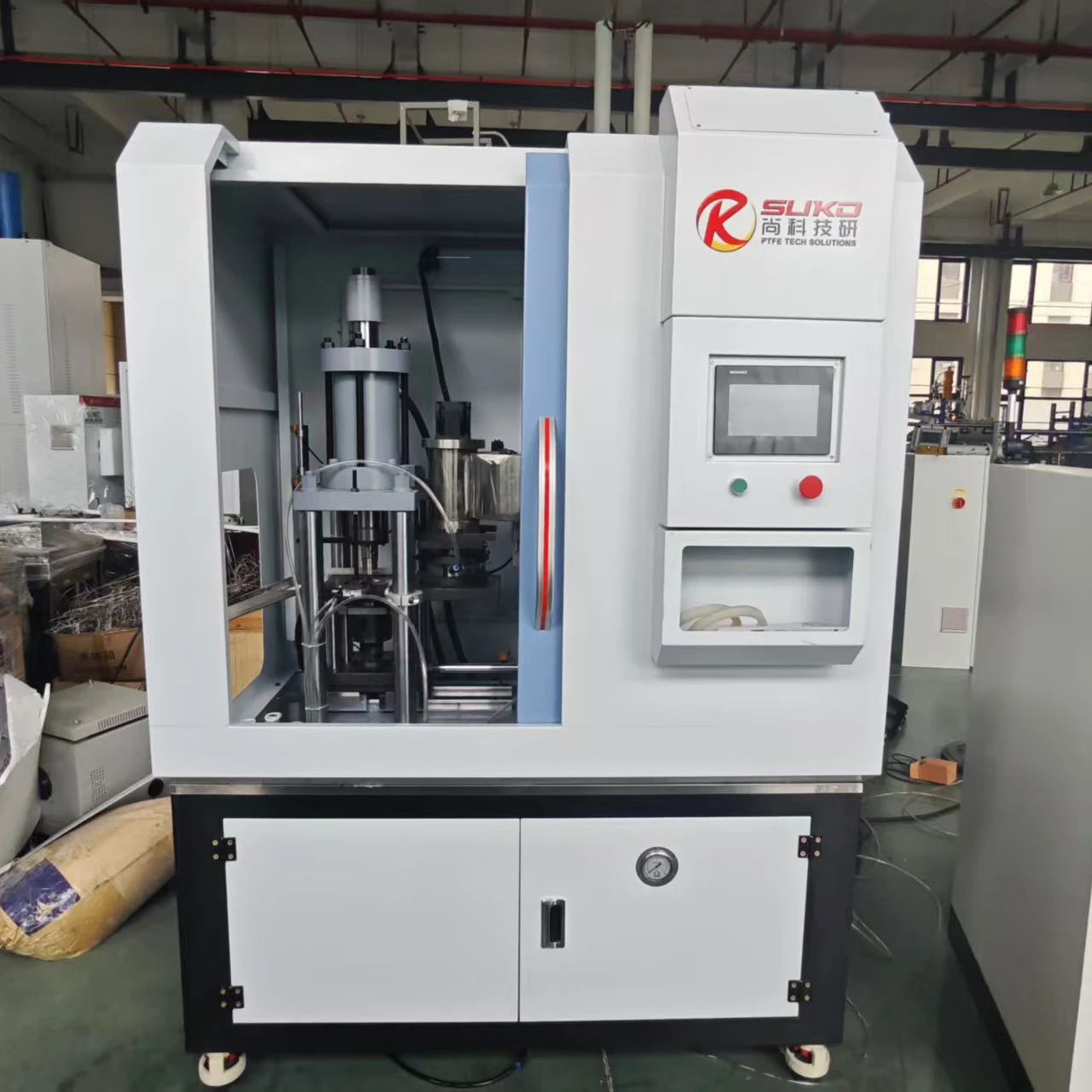
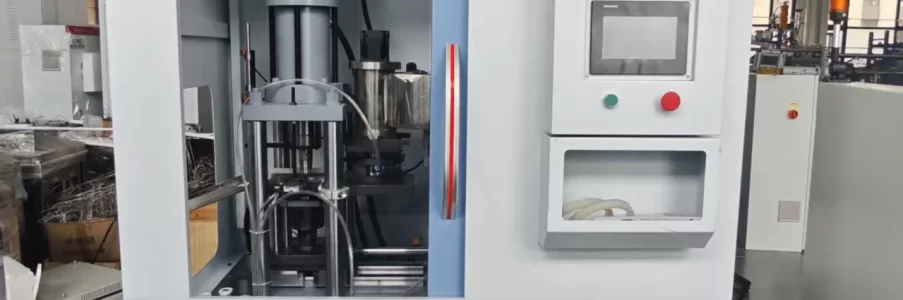
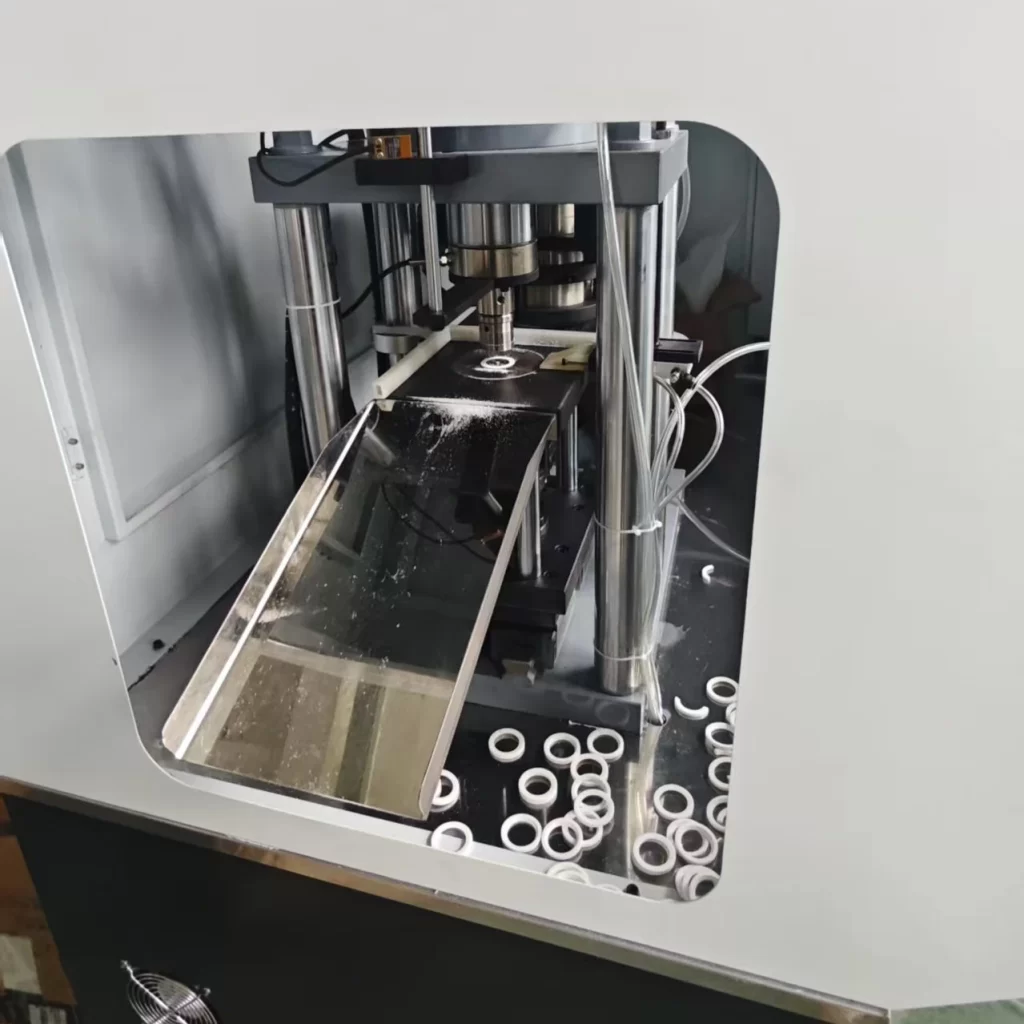
This is where SUKO brings its decades of expertise to the forefront. We don’t just supply materials; we engineer the technology that creates mission-critical components. Our Oil & Gas PTFE Gasket Press Machine | Automatic Molding by SUKO is a testament to this commitment.
As our product description highlights, this is not just any press. It is a “robust PTFE Gasket Press Machine” specifically engineered for the “demanding oil & gas sector.” Our “Automatic Gasket Molding Machine technology creates durable, high-pressure PTFE seals essential for exploration and refining.” By investing in SUKO’s precision machinery, you are empowering your production to:
- Ensure Consistent Quality: Automatic molding eliminates human error, guaranteeing every gasket has uniform density and dimensional accuracy.
- Maximize Material Properties: Our precise control over pressure and temperature cycles ensures optimal sintering, maximizing the gasket’s mechanical strength and creep resistance.
- Enhance Operational Safety: By producing flawless high-pressure seals, our machines directly contribute to enhancing the operational safety of your clients’ facilities.
Anonymous Application Scenario: A major downstream refinery in the Gulf Coast region was plagued by frequent leaks in a heat exchanger unit handling hot, sour hydrocarbons. Their maintenance team was replacing lower-grade gaskets every three months, leading to significant downtime and material costs. After consulting with a parts manufacturer that uses advanced molding technology similar to SUKO’s, they switched to precision-molded, carbon-filled PTFE gaskets. The result: the maintenance cycle for those seals was extended to over two years, saving them an estimated $250,000 annually in downtime and labor, while drastically improving the unit’s safety record.
Conclusion: Your Partner for Uncompromising Sealing Integrity
In the high-pressure world of oil and gas, compromise is not an option. The choice of sealing material directly impacts operational integrity, safety, and profitability. As we’ve seen, PTFE gaskets offer an unparalleled combination of chemical, thermal, and pressure resistance that makes them essential for reliable upstream downstream sealing.
However, the true strength of a PTFE gasket lies in its manufacturing. A superior seal is born from superior technology. By ensuring your gaskets are produced using state-of-the-art equipment, you are building a foundation of trust and reliability that permeates every flange and valve in the field.
SUKO is dedicated to providing that technological foundation. Our deep Experience, industry-leading Expertise, and position as an Authoritative source for PTFE machinery make us a Trustworthy partner in your success.
Are you ready to elevate the standard of your sealing solutions and enhance the safety and efficiency of your or your clients’ operations?
- Contact us today for a personalized consultation on how our technology can meet your specific needs. Visit our contact page: https://ptfe-machinery.com/contact/
- Request a quote for our industry-leading Oil & Gas PTFE Gasket Press Machine and discover how precision engineering can transform your production.
- Email our expert team directly at info@ptfe-machinery.com with your technical questions.
- Explore our full range of advanced PTFE machinery on our website: http://ptfe-machinery.com/
Partner with SUKO and manufacture the high-pressure seals that the oil and gas industry trusts.
Frequently Asked Questions (FAQ)
Virgin PTFE is pure Polytetrafluoroethylene. It offers the highest chemical resistance and purity. However, it is softer and more prone to creep (cold flow) under high pressure. Filled PTFE includes additives like glass fiber, carbon, graphite, or bronze blended into the PTFE resin before molding. These fillers significantly improve mechanical properties like compressive strength and creep resistance, making filled PTFE the superior choice for high-pressure seals and high-temperature applications common in the oil and gas industry.
Our Oil & Gas PTFE Gasket Press Machine uses a fully automated and precisely controlled process. It applies exact, pre-programmed pressure and temperature cycles to the PTFE material. This eliminates the inconsistencies and potential for human error found in manual or semi-automatic processes. The result is a gasket with perfectly uniform density, no internal voids, and precise dimensions every single time. This structural integrity is what allows the gasket to withstand extreme pressures without failing, making it a truly reliable high-pressure seal.
It is strongly recommended not to reuse PTFE gaskets in critical oil and gas applications. When a gasket is installed and torqued, it deforms to create a seal by filling the imperfections in the flange faces. This “seating” process is a one-time event. Once the flange is disassembled, the gasket has already been compressed and has lost its original ability to flow and reseal effectively. Attempting to reuse it creates a significant and unacceptable risk of leakage, especially in high-pressure or hazardous service. Always use a new gasket for every reassembly to ensure maximum safety and reliability.
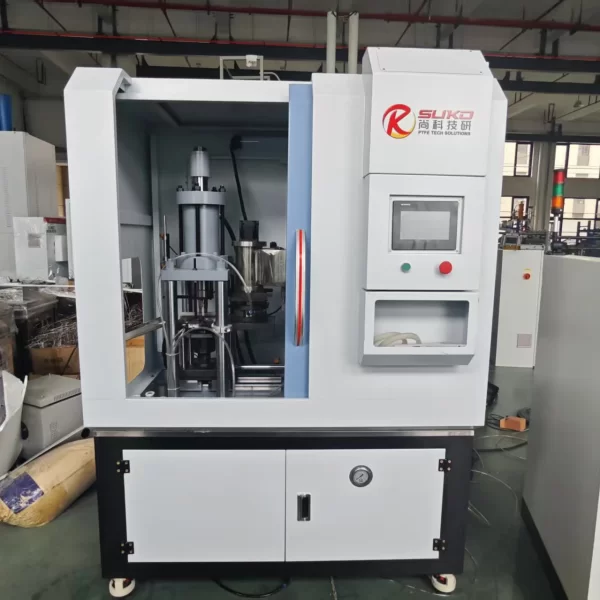
Oil & Gas PTFE Gasket Press Machine | Automatic Molding by SUKO
For the demanding oil & gas sector, SUKO offers a robust PTFE Gasket Press Machine. This Automatic Gasket Molding Machine technology creates durable, high-pressure PTFE seals essential for exploration and refining. Enhance operational safety with our precision gasket making machine, designed for critical applications in the petroleum industry.
 English
  Русский